
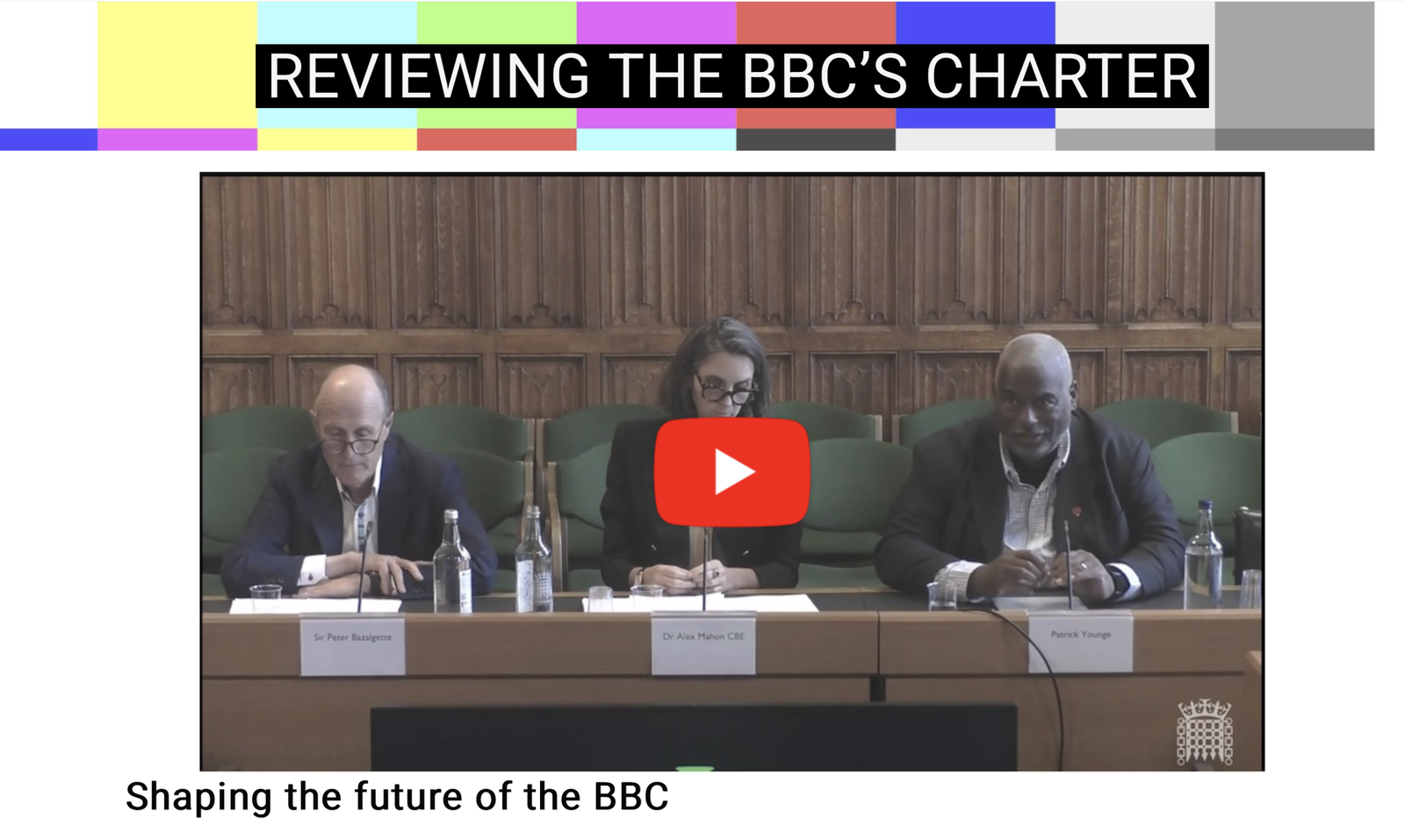
MJRC Research Cited in Evidence to UK Parliament’s BBC Charter Inquiry
MJRC’s research has been cited in evidence submitted to the UK Parliament’s Culture, Media and Sport Committee as part of its inquiry into the BBC Royal Charter Review.
The BBC’s current Royal Charter expires at the end of 2027, and the decisions taken over the coming months will shape the corporation for the next decade and beyond. Earlier this year, the Department for Culture, Media and Sport invited the public to respond to its Green Paper on the review. The Committee is now examining a set of fundamental questions about the BBC’s future: what its purpose should be, how it should be governed, and how it should be funded under the next Charter, which takes effect in 2028.
The evidence draws on The Architecture of Media Capture: Typologies, Global Patterns, and the Tech Threat, Marius Dragomir’s April 2026 study for MJRC.
The study examines the different ways media capture happens in practice. Applying the Capture Typology Framework (CTF), the model Dragomir introduced in 2019, it maps six distinct forms of capture across Europe, the Middle East and the United States: Hungary’s state-restructuring model, Turkey’s family-business model, Egypt’s intelligence-services model, Russia’s proto-authoritarian model, Israel’s billionaire-patron model, and the tech-oligarchic model now emerging in the United States.
That comparative lens is part of what makes the study relevant to the Charter debate. Questions about governance and funding are, at root, questions about how much distance a public broadcaster keeps from political and commercial power, and the study sets out how that distance has narrowed elsewhere. We recently featured the study on the MJRC podcast, available on Spotify.
More on the inquiry: britishbroadcastingchallenge.com.